Salesforce
From Legacy Workflows to Intelligent Native Experiences
The case
Three Critical Operations, One Mission: Going Native
In FY26, I led UX design for three enterprise initiatives sharing one core mission: replace fragile legacy tools with native, AI-ready, human-centered experiences to boost global ROI.
Key initiatives included:
- Strategic customer investment program modernization: $480M+ Portfolio
- FTEs talent development UX reshape: 12K users
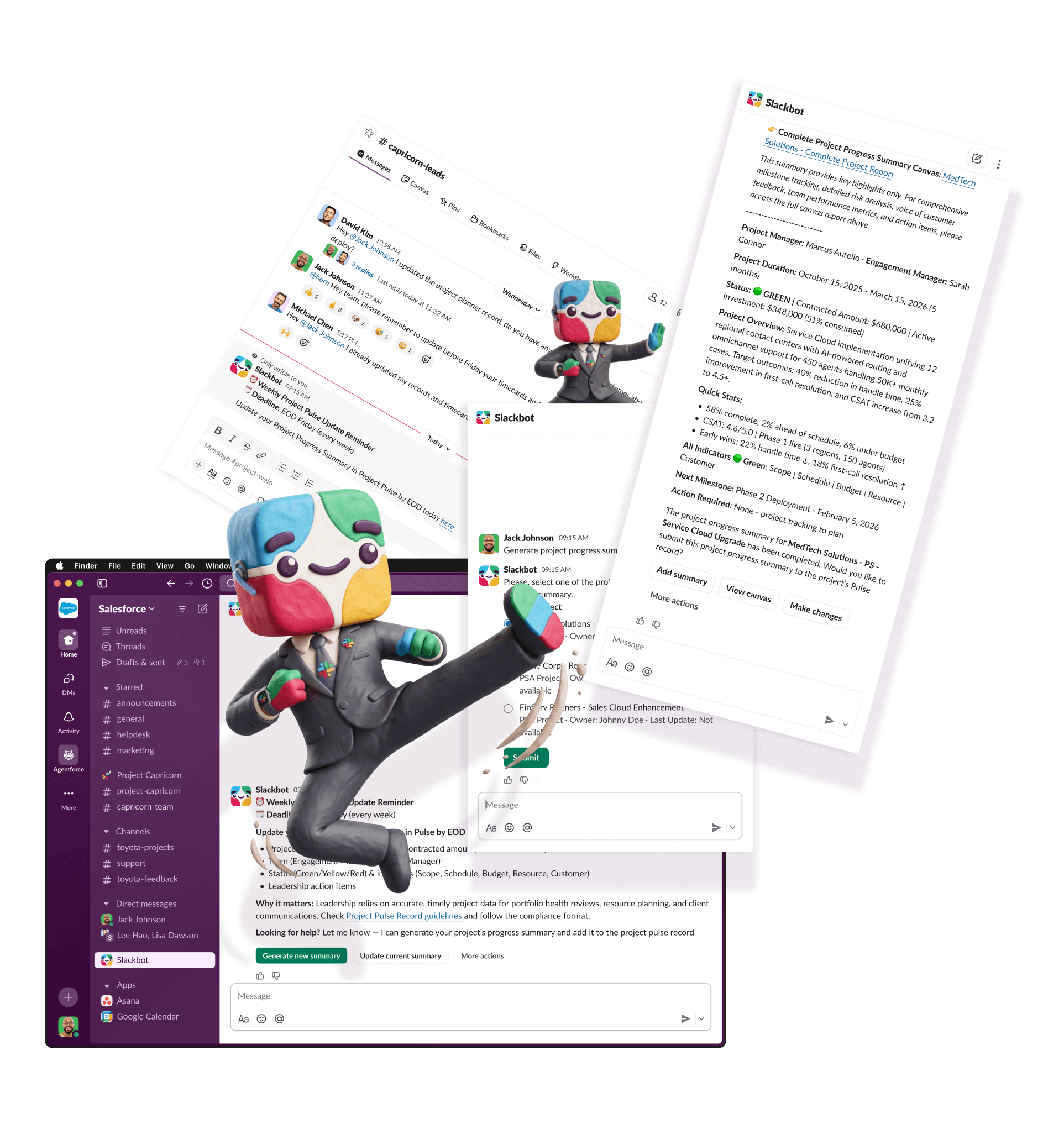
- Automate customer project reporting:~2K users, 144 hrs/year of manual work
My Role
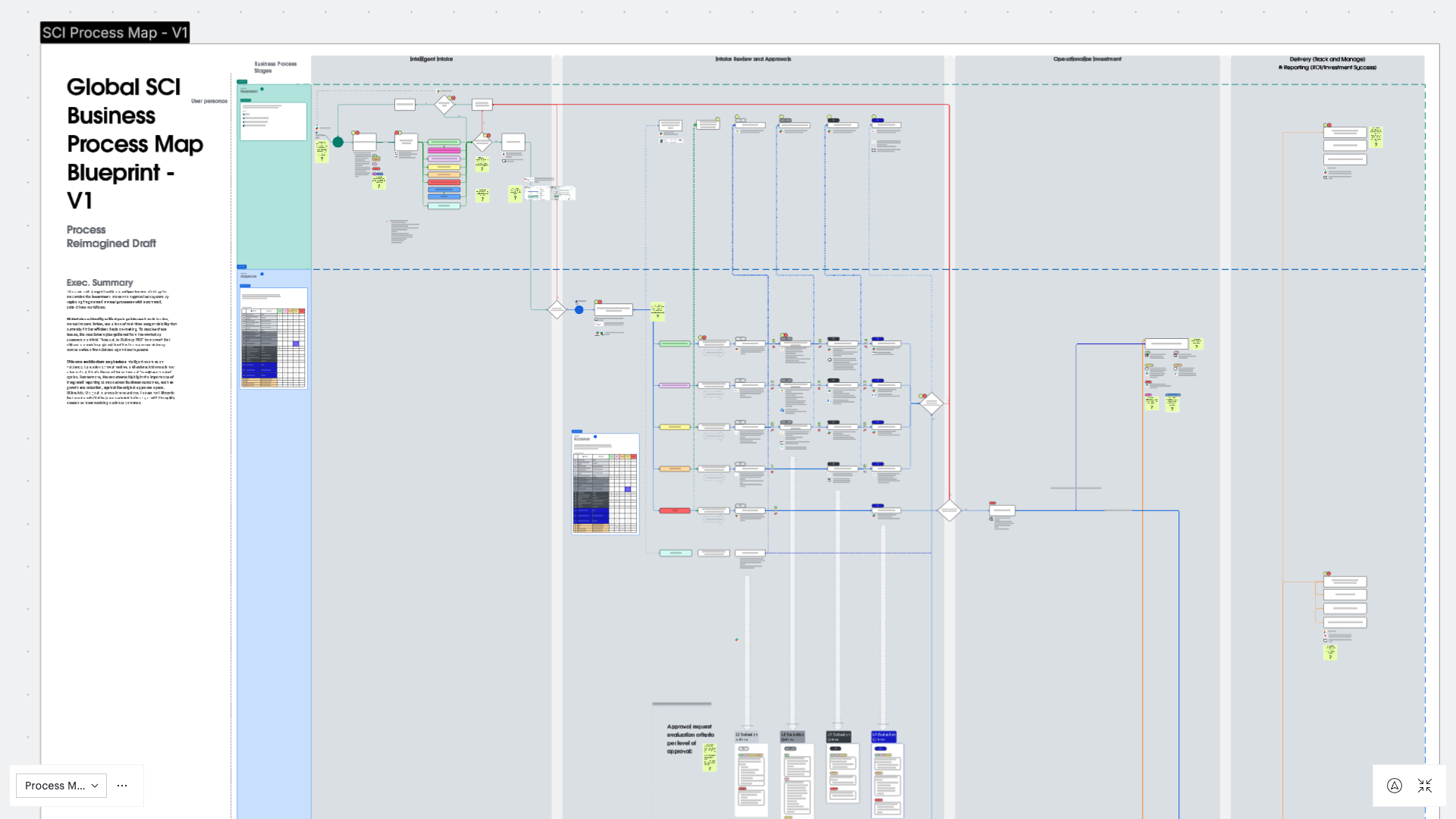
As Senior Product Designer, I led UX across all three, running discovery through stakeholders workshops, user research + interviews, mapping business procesess information architecture, and workflows relationships, prototyping operational surfaces, validating with usability testing, and delivering measurable operational readouts — replacing each legacy system with a Salesforce-native, Slack-first experience.
Due to non-disclosure agreements, specific proprietary data workflows and sensitive infrastructure blueprints have been omitted. I am happy to discuss my strategic methodology and system design process in detail during an interview.
Business Impact
Replatforming legacy, fragmented systems on all three enterprise initiatives into native and agentic experiences delivered measurable time, cost, and compliance wins across all three initiatives:
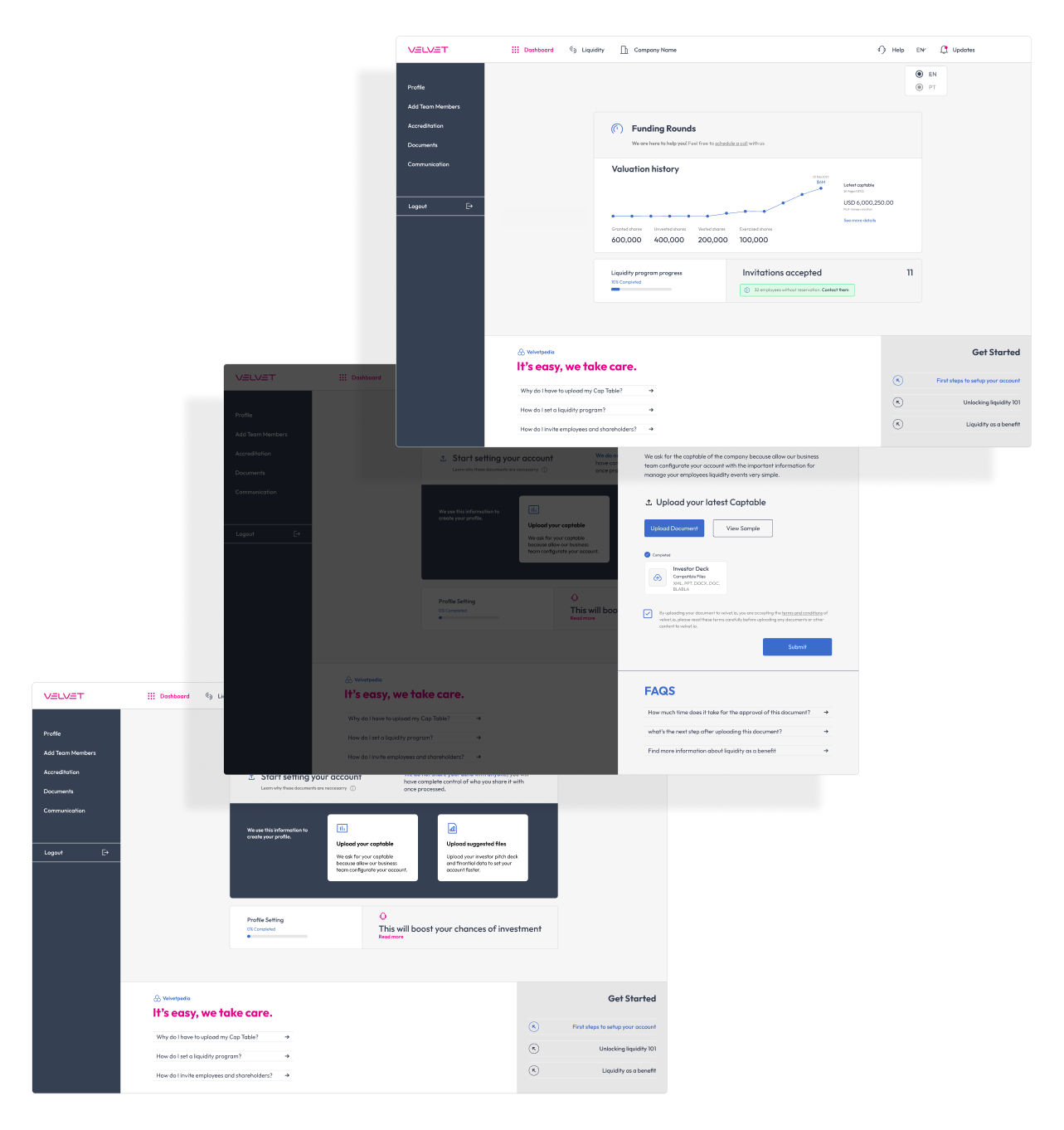
- Retired legacy Visualforce apps and shipped a unified Lightning Web Components experience for ~12k FTEs to efficiently manage talent development and career growth.
- 12-20 hrs/month saved per project manager, with 80% of projects reporting workload automated — unlocking 144-340+ hrs/year and projecting $152M in annual savings.
- Reduced turnaround time for managing high-volume strategic customer investments from 12–20 days down to 1 hour–1 day, while cutting minimum approval times from 18.4 days to under 4 days and maximum approval times from 1–2 months to under 12 days.
- Retired all legacy risks and vulnerabilitites and achieved audit-ready SOX compliance for all customer investment systems and procesess.
The Challenges
Three high-stakes, high-volume Salesforce operations—customer investment mechanisms, FTE talent development, and project reporting—were each running on tools never built to scale. This forced thousands of users into manual workarounds rather than making quick, reliable, data-driven decisions directly within their normal workflows.
Key technical and operational bottlenecks across these workflows included:
- Talent development and career growth legacy systems couldn't scale to meet modern integration frameworks, adhere to WCAG 2.2 AA accessibility standards, and align with the long-term enterprise vision, blocking the transition toward an agentic model.
- Project managers decisions and reporting depended on signals scattered across 9 disconnected systems, with most managers losing ~144-340 hrs/year in coordination rather than delivering.
- $480M+ in customer investments were tracked through vulnerable mechanisms, creating SOX compliance risk.
- ~6,000+ investment requests/year, with 70% expiring, stalling, or getting rejected due to tooling limits, and 1–2 month approval cycles.
Projects & Lateral Productions
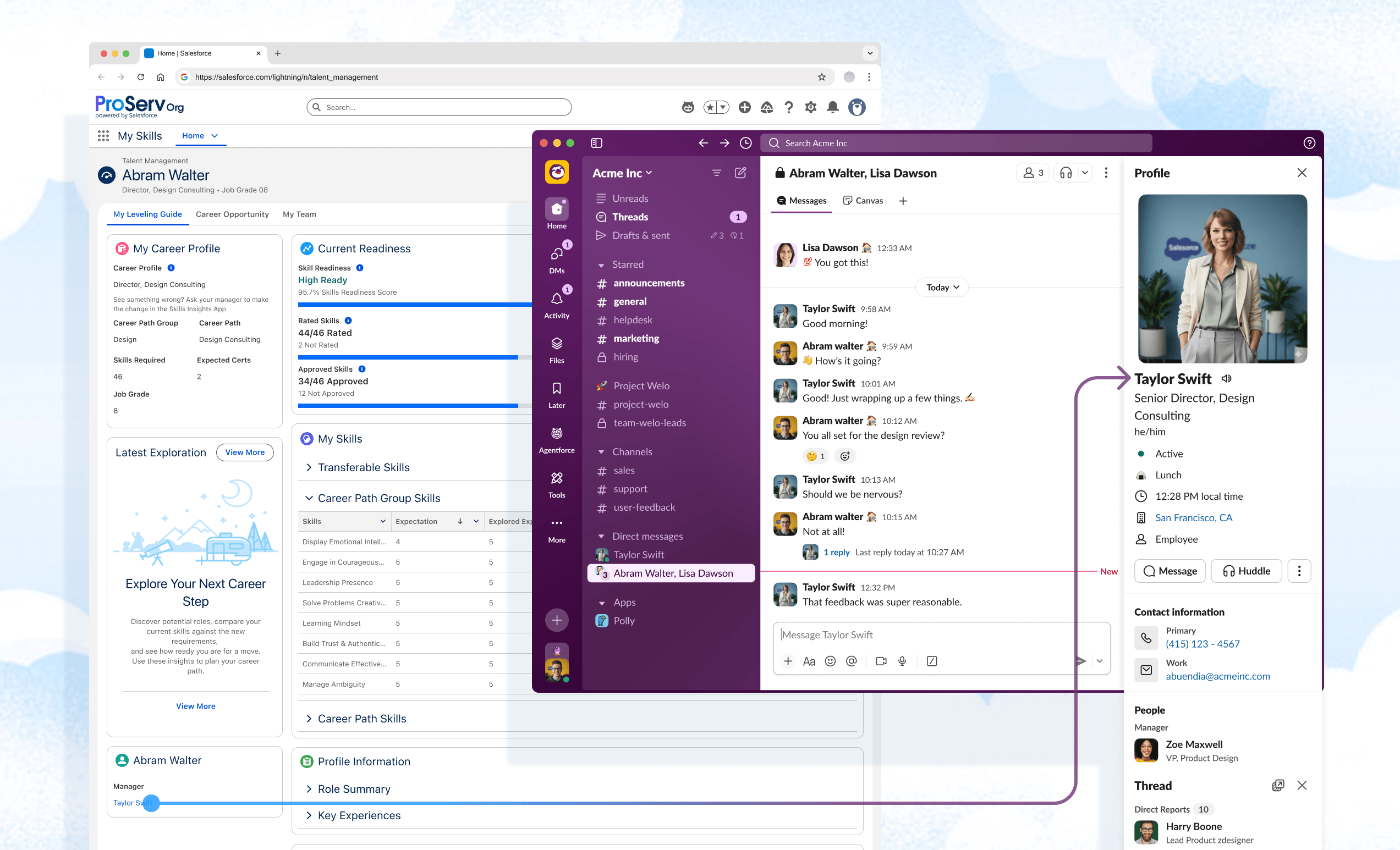
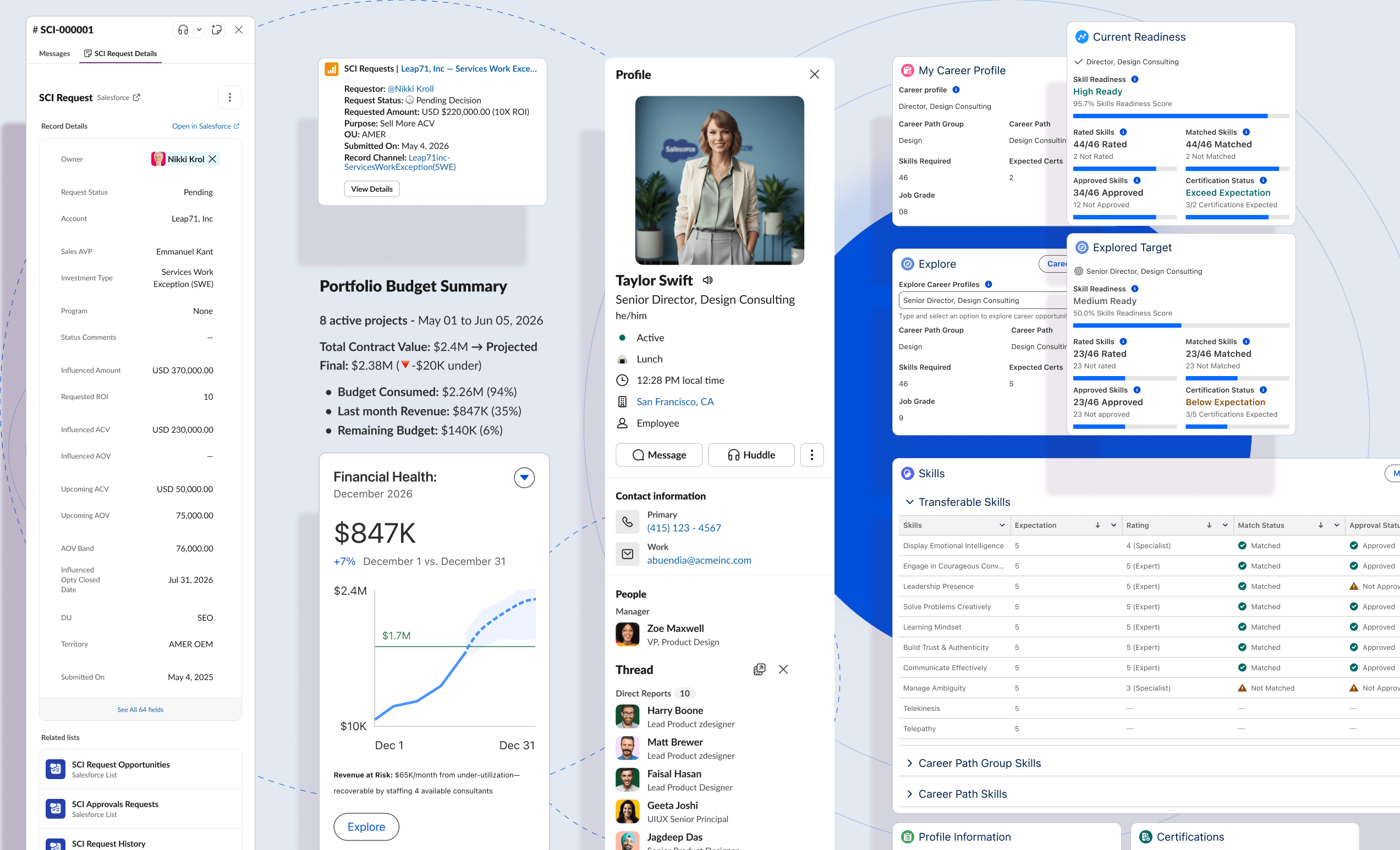
- Talent Developmet UX Redesign — Unified the talent development experience into one LWC experience on Salesforce Cloud for all ~12k internal users, including project managers, lead architects, software engineering managers, and individual contributors (ICs).
- Opportunity Playground — Concept and prototype for a Services Agent that orchestrates projects tracking, FTEs availability/utilization, compliance, and project reporting.
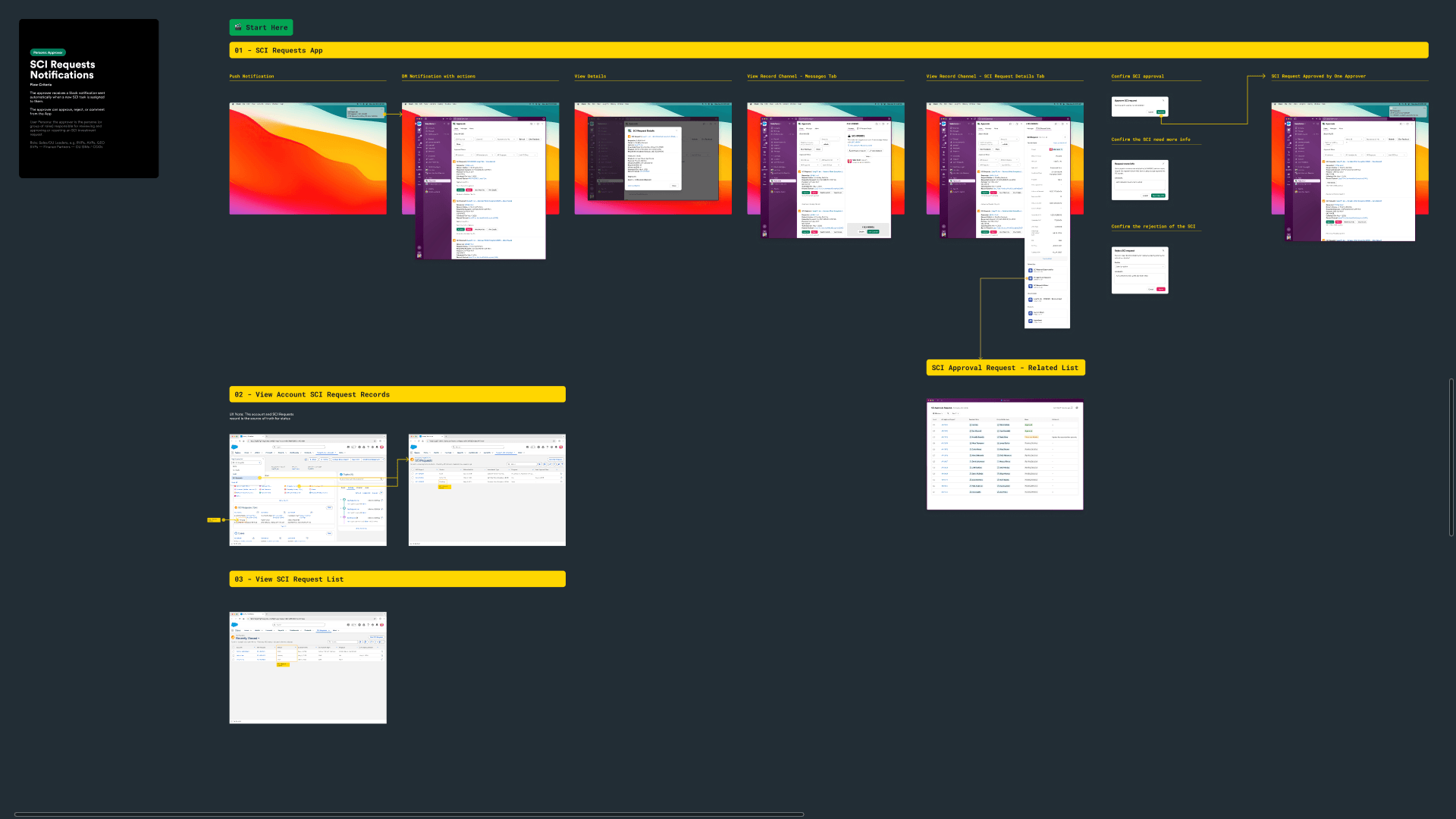
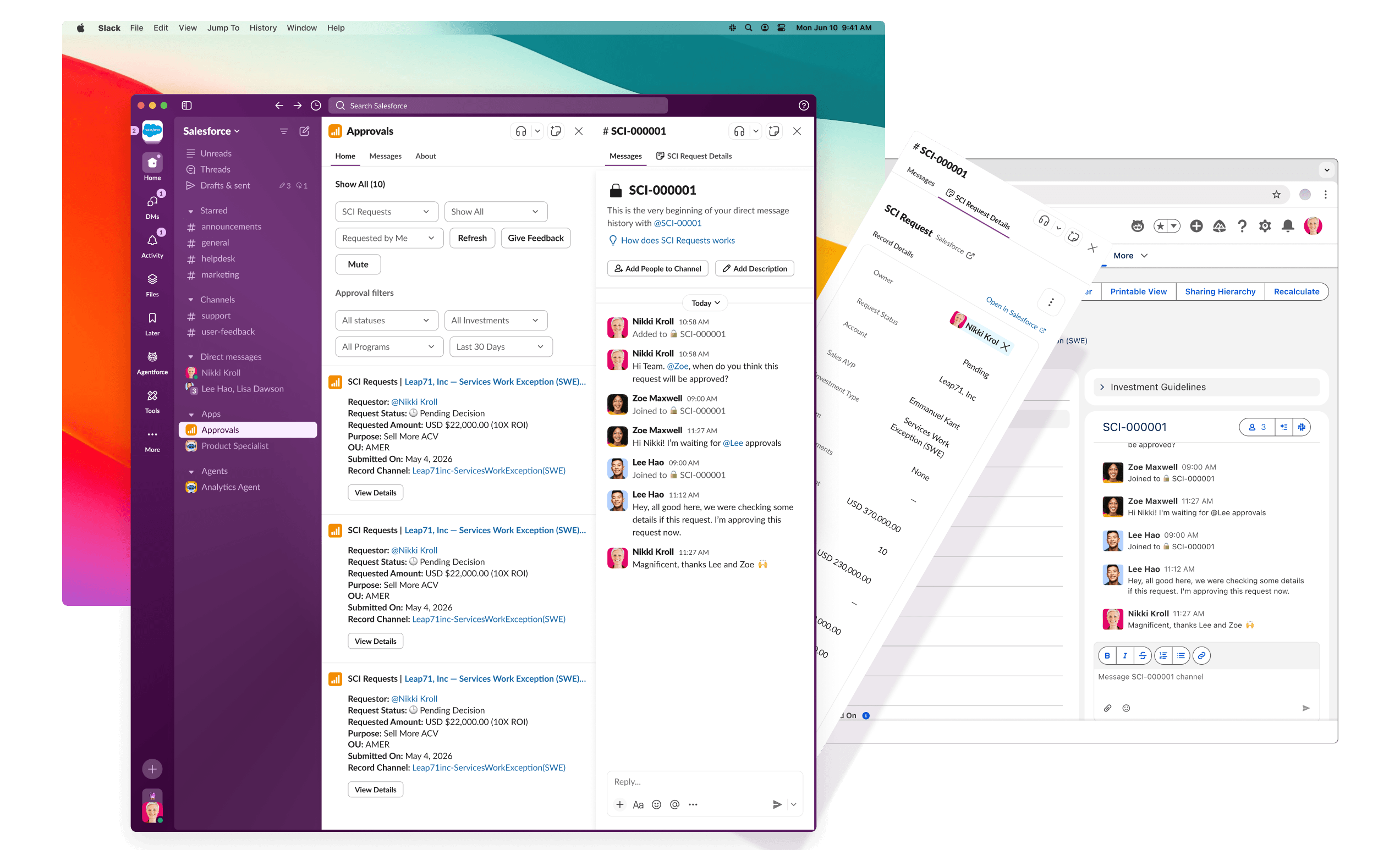
- Strategic Customer Investments 2.0 Modernization — Replaced legacy and vulnerable systems with a Salesforce-native custom app and Slack-first management engine (filtered queues, in-context status actions, automated MAP/SOX routing).
- Supporting deliverables: UX audits, business stakeholders workshops and management, moderated interviews (managers, consultants, RVPs/VPs/SVPs), usability testing, wireframes/wireflows, UX engineering feasibilty asessments, executive-ready UX readouts for each initiative, and ongoing development and deployment support.
Key Results
- Talent Management Modernization: Replaced legacy Visualforce apps with a unified Lightning Web Components experience for 12,000 FTEs to streamline career growth.
- Project Management Automation: Automated 80% of project workloads, saving 12–20 hours monthly per manager and projecting $152M in annual savings.
- Investment Processing Speed: Reduced investment turnaround times from 12–20 days to 1 hour–1 day, cutting peak approval times down to under 12 days.
- Compliance & Risk Mitigation: Replaced legacy vulnerabilities with audit-ready, SOX-compliant customer investment systems.